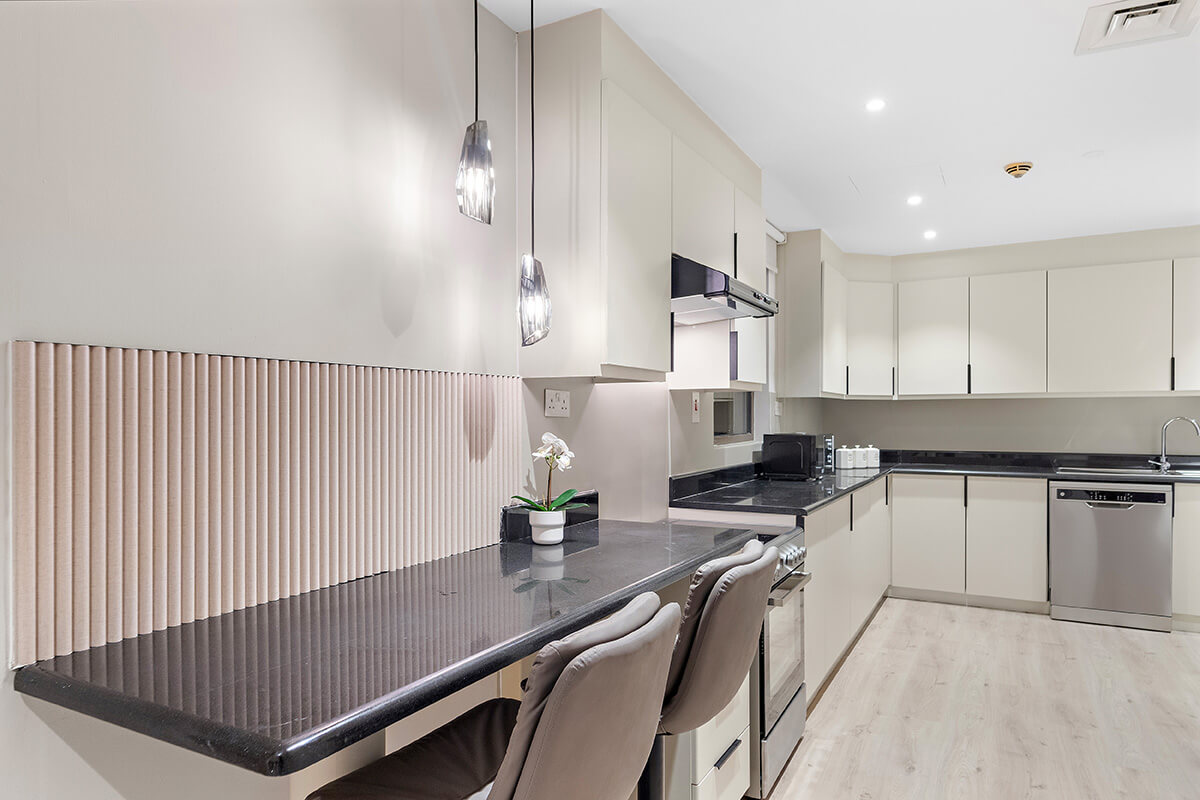
The work required at handover depends on how much planning has already been completed. Some owners will have defined the furnishing brief and operating model in advance, while others will use the completed apartment to determine its positioning. From that point, the unit's condition, supporting documents, and building procedures must be brought together before the first guest arrives.
Before Handover: The Rental Brief That Still Matters
Pre-handover planning is best kept focused on the features that will still matter when the keys arrive, since layout, view, practical storage, and building services can shape guest appeal while the operating decision determines how the apartment will be prepared and managed.
Owners deciding whether to Airbnb a property should consider the variable income pattern, guest-service workload, and building procedures. Those starting a short-term rental business benefit from defining the guest, furnishing standard, and management approach before handover.
What Should an Owner Check at Handover?
Handover is the point at which the apartment can be assessed as a completed space rather than a plan. A careful snagging review records visible defects and tests the systems that will affect a stay, so outstanding matters can be documented through the appropriate handover channel.
The review should separate cosmetic observations from items that could affect comfort, safety, or listing accuracy. The main inspection areas are:
- Walls, floors, doors, windows, and fitted joinery
- Water supply, drainage, sanitary fittings, and water heating
- Electrical outlets, lighting, and fitted appliances
- Air conditioning, ventilation, and room-by-room cooling
- Balcony finishes and areas within the owner's maintenance responsibility
- Keys, access cards, parking access, and building entry arrangements
Once the findings are recorded, the owner can distinguish work that needs attention before furnishing from minor matters that can be managed without compromising the guest-ready standard. Qualified technicians should assess technical faults, while responsibility for common areas and building systems depends on the building's arrangements.
Utilities, Access, and Building Registration Come Next
A finished apartment still needs its essential services and access arrangements in place before furnishing teams, photographers, or guests can use it reliably, so electricity, water, cooling where separately administered, and internet should be activated and tested against the apartment's actual set-up.
Building registration is a separate practical step. The owner or operator may need to register contact details, collect access credentials, understand guest-entry procedures, and confirm how contractors enter the property. Requirements vary by building, so direct confirmation with building management is more reliable than assuming one community's process applies elsewhere.
Furnishing an Off-Plan Apartment for Guest Use
Furnishing begins with how guests will use the completed layout, not simply how the apartment appeared in sales material. Sleeping capacity, circulation space, dining provision, luggage storage, lighting, and work surfaces should remain coherent, so the property photographs accurately and feels comfortable in person.
Durability also matters because a holiday home experiences a higher rate of turnover than a private residence. Finishes, fabrics, kitchen equipment, and replaceable items are best selected with cleaning, maintenance, and replacement in mind, while the visual scheme should suit the apartment rather than filling the space with decorative pieces.
Owners familiar with a holiday-home conversion will recognise the same guest-readiness questions, although a newly handed-over unit begins without an established residential set-up. The advantage is a clean furnishing brief; the trade-off is that every operating detail must be introduced and tested before photography.
The DET Permit and Listing Preparation
Before the apartment is advertised, it needs a holiday-home permit from DET. The permit process remains separate from the broader work of furnishing, photography, platform set-up, and operational preparation.
The DET Holiday Homes User Guide also informs the property's safety set-up. Required provisions include fire extinguishers and fire blankets, protective gloves and a torch, a first-aid kit, displayed emergency procedures, a 24-hour maintenance contact, and a SIRA-approved smart lock connected to the Keyless system. Servicing should follow the manufacturer's instructions and applicable provider requirements.
Listing preparation can proceed around the same stage without publishing the property prematurely. Accurate room descriptions, an honest amenity record, professional photography, and clear access information help future guests understand what they are booking. The final listing should match the completed apartment rather than an artist's impression or an earlier specification.
From a Live Listing to the First Guest
Once the permit has been issued and the apartment and listing are ready, the opening calendar should show the property's genuine availability. Pricing can then respond to seasonality, booking lead time, booking pace, and availability across the local market, while every rate adjustment remains commercially viable.
The first reservation tests more than the apartment itself. Responsibilities for guest communication, arrival arrangements, housekeeping, linen, maintenance escalation, and post-stay turnover should be assigned before the booking is accepted. A smooth first arrival depends largely on the operational preparation completed before the guest reaches the building.
How First Class Property Management Moves From Handover to Hosting
First Class Property Management can bring the post-handover stages into one operating plan, covering registration, the business case, furnishing set-up, photography, platform listings, and the appointment of a dedicated Guest Experience Manager. Its established onboarding can typically be completed in around two weeks when the required documents are available and the apartment needs no substantial work.
Owners can see which preparations overlap and which depend on the unit being complete in the onboarding timeline. Once guests begin arriving, the standard welcome is in person, with self check-in reserved for exceptional circumstances when a personal arrival is impractical.
The operating scale extends across more than 630 managed properties. Based on First Class Property Management's portfolio data, short-term rentals have produced approximately 27 per cent higher returns than comparable long-term rentals. This portfolio result is neither a guarantee nor a market-wide benchmark. An individual outcome still depends on layout, location, building quality, positioning, and operating costs.
FAQ
Can the holiday-home permit be arranged before an off-plan property is handed over?
The owner can prepare the application before handover, and DET may accept an approved DLD sale and purchase agreement where the title deed is not yet available. However, the application also requires current property information and a DEWA bill, while the completed unit must meet the applicable holiday home requirements. The practical submission stage will therefore usually depend on the handover status and availability of the required documents.
What should an owner prepare before the DET permit application?
The owner should prepare the title deed or approved DLD sale and purchase agreement, an applicable developer NOC, signed owner identification, company documents where relevant, authorised-signatory identification, a Property Management Letter, and a current DEWA bill. Additional documents may be required according to the property and ownership structure.
What should an owner replace first once guest feedback arrives?
Early replacements should address anything that affects comfort, function, or listing accuracy. Guest feedback and turnover inspections may show where an item, fitting, or fabric is wearing faster than intended, which allows the owner to prioritise practical needs before making decorative changes.
What should an owner do if the building's short-term letting position is unclear?
The owner should review the registered building regulations and request written clarification from the Management Entity about guest access and shared facilities. DET determines permit eligibility, so building correspondence is not a separate approval. Any conflict may require clarification from the relevant authority or legal advice.
If your handed-over apartment is ready for an operating plan, request a rental estimate from First Class Property Management and map the route from unit readiness to the first guest.