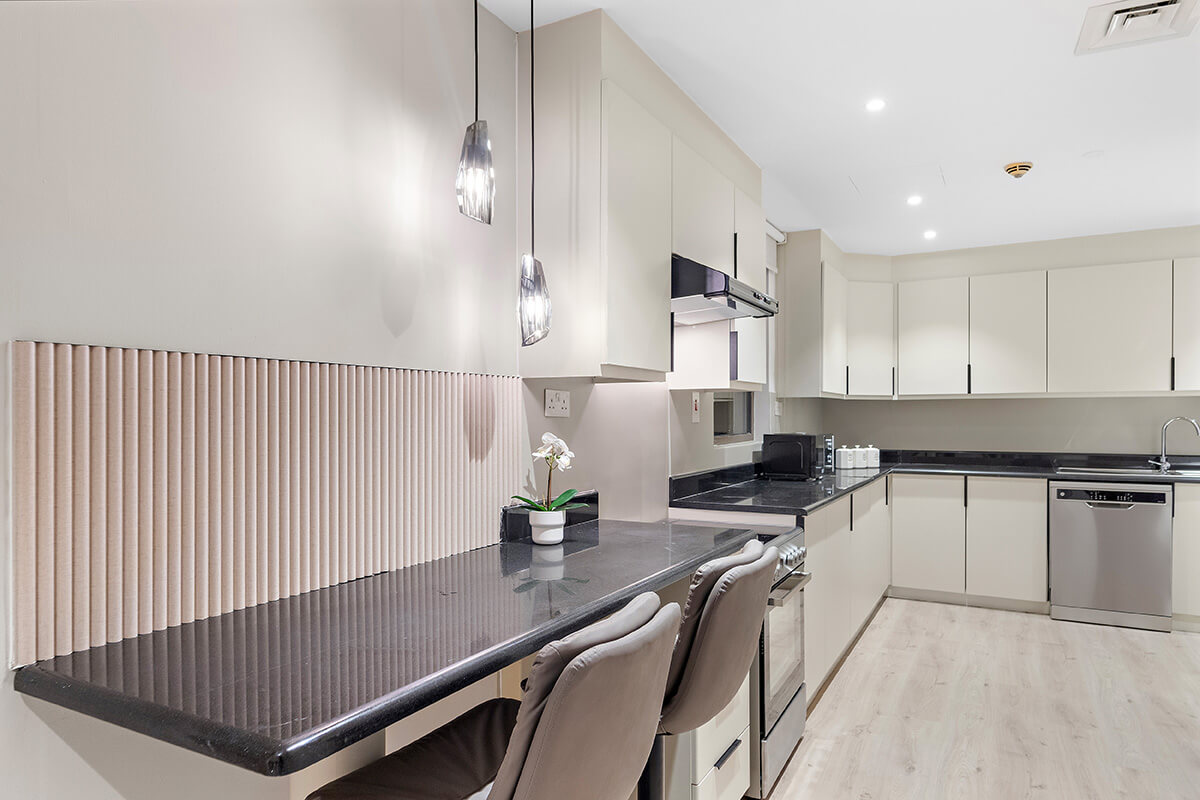
The property's starting condition determines how much preparation is required. An empty apartment may need a complete furnishing scheme, while an existing home may require only repairs, replacements, and additions for guest use. A practical budget therefore begins with an inventory of what is present, what can remain, and what must be arranged before the listing goes live.
What Counts as a Set-Up Cost?
A set-up cost is an expense or initial payment needed to prepare the property for launch. Furnishing, initial photography, listing preparation, opening stock, and registration fit within this budget. The first payments for recurring obligations, including the permit, insurance, and utilities, also need to be included in the cash required before opening.
Your comparison of property management fees is clearer once you know which preparation services are included and which require separate payment.
Furnishing and Interior Design: Choosing a Finish Level
First Class Property Management quotes two finish tiers, Premium and Signature, with indicative price ranges organised by unit size below.
First Class Property Management interior design tiers, indicative price ranges; final quotes depend on the unit:
- Studio: Premium: AED 25,000 to 30,000; Signature: AED 40,000 to 45,000
- One-bedroom: Premium: AED 40,000 to 45,000; Signature: AED 55,000 to 60,000
- One-bedroom with maid's room: Premium: AED 45,000 to 50,000; Signature: AED 64,000 to 68,000
- Two-bedroom: Premium: AED 65,000 to 70,000; Signature: AED 80,000 to 85,000
- Two-bedroom with maid's room: Premium: AED 73,000 to 78,000; Signature: AED 87,000 to 93,000
- Three-bedroom: Premium: AED 105,000 to 110,000; Signature: AED 120,000 to 125,000
- Three-bedroom with maid's room: Premium: AED 110,000 to 115,000; Signature: AED 125,000 to 135,000
Confirm what each quotation includes, such as design, furniture, appliances, window coverings, decor, delivery, installation, and VAT where applicable. The quotation should also identify exclusions and any items that remain subject to a property assessment.
DET Registration and the Permit
DET sets the registration and permit fees. Under the published schedule checked in September 2026, setting up the host or operator account is a one-off AED 1,520. Amounts are indicative and are confirmed on the DET portal at submission.
The permit fee is AED 300 per bedroom, plus AED 50 for the classification certificate and the AED 10 knowledge and AED 10 innovation fees. A studio or one-bedroom home therefore carries a permit fee of AED 370 under that schedule. The per-bedroom permit component is capped at AED 1,200 per holiday home each year.
On 21 May 2026, the Government of Dubai announced an economic incentives package that includes exemptions from permit and licence fees for holiday homes and from collection of the Tourism Dirham. Implementation dates and eligibility are to be confirmed by DET. Until the applicable exemption is confirmed, owners should use the amount shown on the DET portal when preparing the budget.
You will find each charge explained in the full list of DET fees, and the portal confirms the amount that applies to your application before payment.
Building Procedures and Utility Set-Up
DET determines whether the property qualifies for a Holiday Home permit. The building administers valid access, security, registration, and shared-area procedures. Building management is not a separate licensing authority with an unrestricted right to approve or reject lawful holiday-home use.
The Management Entity is the contact for those procedures, and owners and occupants must follow the registered community and building regulations. Arrange preparation access accordingly, and confirm that the DEWA account and bill meet DET's application requirements. Internet and any separately administered cooling service should also be ready for use.
Which Insurance Questions Should Be Settled Before Listing?
Insurance is a question to settle before listing, with cover remaining valid throughout the licence period. Ask the insurer to confirm the intended holiday-home use, the applicable cover, and any exclusions. Include the first policy payment in the launch cash requirement, while treating future renewals as recurring operating costs. Confirm who will arrange the policy and monitor its expiry date.
Photography and Listing Preparation
Commissioning professional photography after the furnishings, repairs, cleaning, and final styling are complete allows the listing to represent the property as guests will find it. The photography brief should cover each room, the sleeping arrangements, important amenities, storage, work areas, outdoor space, and any view that forms part of the property's appeal. Images should remain accurate and should be refreshed if later changes materially alter the furnishing, layout, or advertised facilities.
Listing preparation should follow the completed property rather than an earlier design proposal. This includes verifying the amenity list, writing room descriptions, confirming sleeping capacity, and ensuring that access, parking, and other practical details are current. The agreed scope should state whether photography, editing, listing creation, and distribution across booking platforms are included. Any separate charges, usage rights, and responsibility for future updates should also be confirmed before launch.
Opening Stock: Linen and Guest Consumables
Opening stock turns a furnished apartment into a property that can support its first stay and subsequent turnovers. Linen and towels should match the bed configuration, maximum guest capacity, turnover schedule, and expected laundry lead time. Guest consumables also need an initial purchase based on the agreed standard for each stay.
Set inventory par levels before ordering. These are the target quantities held for each item and should provide enough stock for normal use, items in the laundry, and a reasonable reserve for damage or delayed returns. Record the approved quantities at handover so the initial set-up purchase remains distinguishable from recurring replenishment and replacement costs.
Before approving the opening stock order:
- Confirm every bed size and configuration, together with the linen and towel sets required for the property's maximum occupancy.
- List the guest consumables to be provided, their opening quantities, and who will monitor and replenish them.
- Confirm that secure, accessible storage is available for spare stock and that the inventory can be counted during inspections.
A Set-Up Budget You Can Complete
This table separates launch purchases from lines that continue after opening. Insert the relevant furnishing tier and obtain a quote for each unpriced item.
DET figures follow the published schedule checked in September 2026: indicative; confirmed on the DET portal at submission.
- Furnishing and interior design: One-off or recurring: One-off; What sets the amount: Unit size and finish level; Figure: Applicable Premium or Signature figure above
- DET host or operator account: One-off or recurring: One-off; What sets the amount: DET portal at submission; Figure: AED 1,520
- Initial permit and associated fees: One-off or recurring: Initial payment; renewal costs recur; What sets the amount: Bedrooms and DET portal at submission; Figure: AED 370 for a studio or one-bedroom
- Utility set-up: One-off or recurring: Initial arrangements; ongoing bills separate; What sets the amount: Accounts and applicable providers; Figure: Quoted for the unit
- Insurance: One-off or recurring: Initial payment; recurring cover; What sets the amount: Policy terms; Figure: Quoted for the unit
- Photography and listing preparation: One-off or recurring: Initial set-up; What sets the amount: Agreed scope; Figure: Quoted for the unit
- Linen and guest consumables: One-off or recurring: Initial stock; replenishment separate; What sets the amount: Inventory par levels; Figure: Quoted for the unit
The unpriced rows remain part of the launch budget, so the furnishing tier and permit payment alone do not establish the total.
Where Set-Up Costs End and Running Costs Begin
The distinction depends on what the expense supports, not simply when the invoice is paid. The initial linen purchase and opening stock belong in the set-up budget because they prepare the property for launch. Laundry, consumable replenishment, routine cleaning, and replacement of items used during stays belong in the recurring operating budget.
Owners should account separately for ongoing running costs, including turnovers, utilities, internet, maintenance, platform charges, insurance, and management. Some of these costs begin before the first reservation because electricity, water, cooling, connectivity, and insurance may need to be active while the property is prepared and photographed. Allowing for this pre-launch period prevents the set-up budget from understating the cash required before booking income begins.
How First Class Property Management Prepares the Home
First Class Property Management typically completes onboarding in around two weeks, although missing documents or substantial furnishing work can extend the schedule. Furnishing set-up, professional photography, and listing preparation form part of that process, with a dedicated Guest Experience Manager assigned before the first guest arrives.
The onboarding timeline provides a useful framework for planning the work from appointment through to launch. It concludes when the property is ready and the listing is live, while the timing of the first reservation depends on demand, pricing, availability, and the property's appeal to guests.
FAQ
Can you approve set-up spending while living abroad?
You can establish a written approval process before work begins, naming who may authorise purchases and how proposed changes reach you. It helps to request an updated itemised quote when the scope changes. This gives you a practical basis for deciding whether additional work proceeds while someone else coordinates access locally.
Should you retain a contingency in the launch budget?
A contingency can remain separate from committed spending until the property assessment is complete. It is worth asking which items are still provisional and what could change their scope. You can then decide how much to hold back from the available budget, using the unit's unresolved work rather than a general allowance.
What should you retain when the set-up is complete?
You can request the final inventory, supplier invoices, warranty information, and a record of completed work as part of handover. It also helps to confirm who stores these documents and how you can access them. They provide a reference when checking what was supplied or asking a supplier about an item after launch.
To assess the property's potential alongside its preparation budget, you can request a rental estimate from First Class Property Management.