Luxury Villas vs Penthouses: Which Performs Better for STR in Dubai?

7

 min read

Luxury Villas vs Penthouses: Which Performs Better for STR in Dubai?

7

 min read

Neither property type performs better in the abstract. Luxury villas in Dubai earn through rate, with fewer bookings, longer stays, and a nightly figure that can run several times a penthouse rate through the peak window, while penthouses earn through consistency, with shorter stays, higher booking frequency, and demand that holds through the summer. The stronger short-term rental investment is the one whose revenue profile, operating cost, and seasonality match what the owner wants from the property.

This comparison covers revenue, operations, seasonality, and the owner each type suits.

Two Premium Property Types. Very Different Business Models.

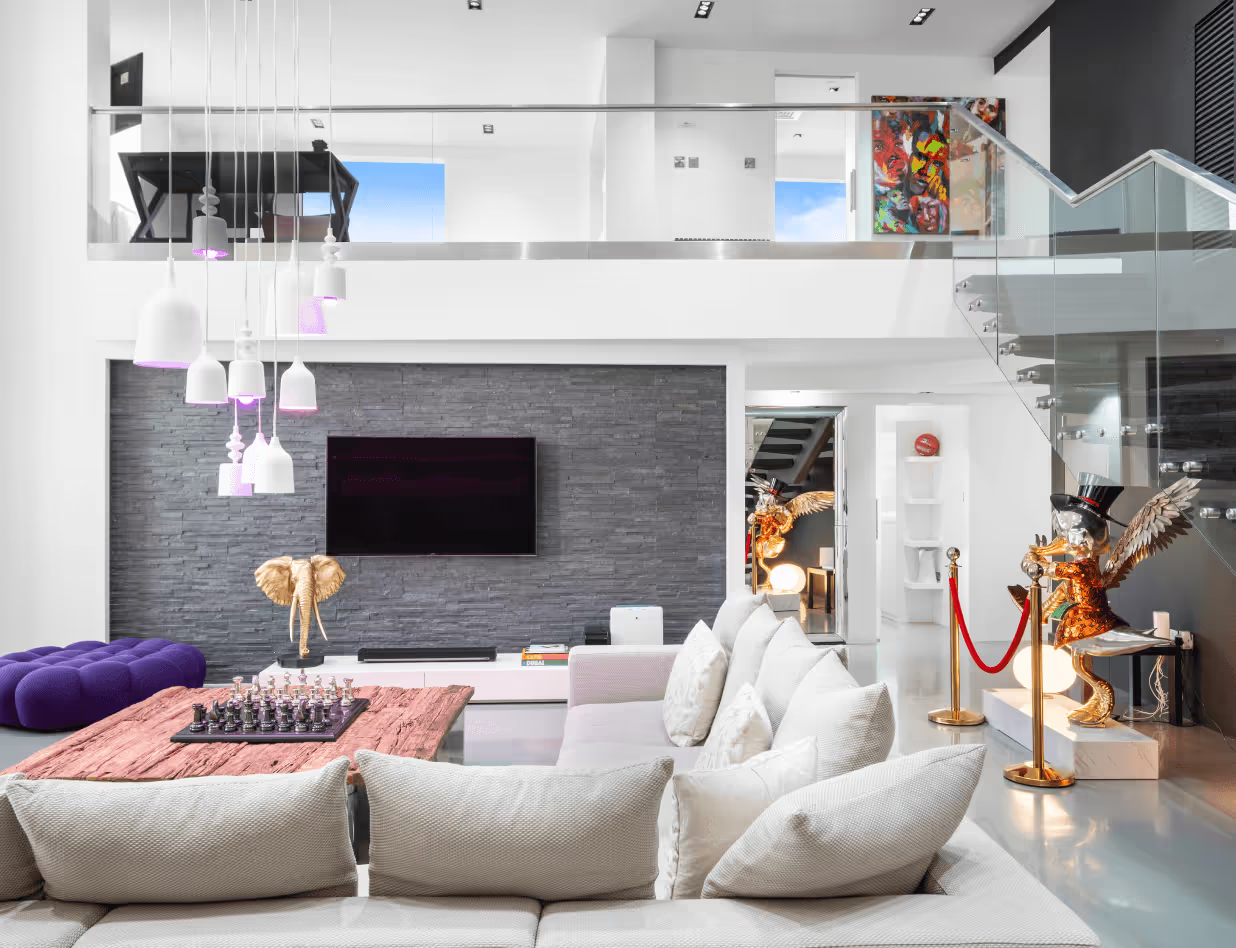
Villas sit in communities such as Palm Jumeirah, Emirates Hills, and Dubai Hills, where space, privacy, and outdoor living carry the value, and they anchor Dubai's luxury villa market. Penthouses sit at the top of towers in Downtown, Marina, and JBR, where the view and the address do most of the work.

Both produce strong short-term rental income, though the guests they attract, the operations they require, and the risks they carry separate sharply, so the question is which performs better against a particular owner's priorities.

Guest Profiles: Who Books What

The two property types draw different guests, and that difference shapes everything downstream.

Villa bookings come mainly from families, multi-generational groups, and high-net-worth travellers who want privacy, space, and the run of an entire property. Stays commonly run from five to ten nights, and the premium rate carries a matching expectation throughout, which is one reason family villas in Dubai reward consistency more than peak pricing.

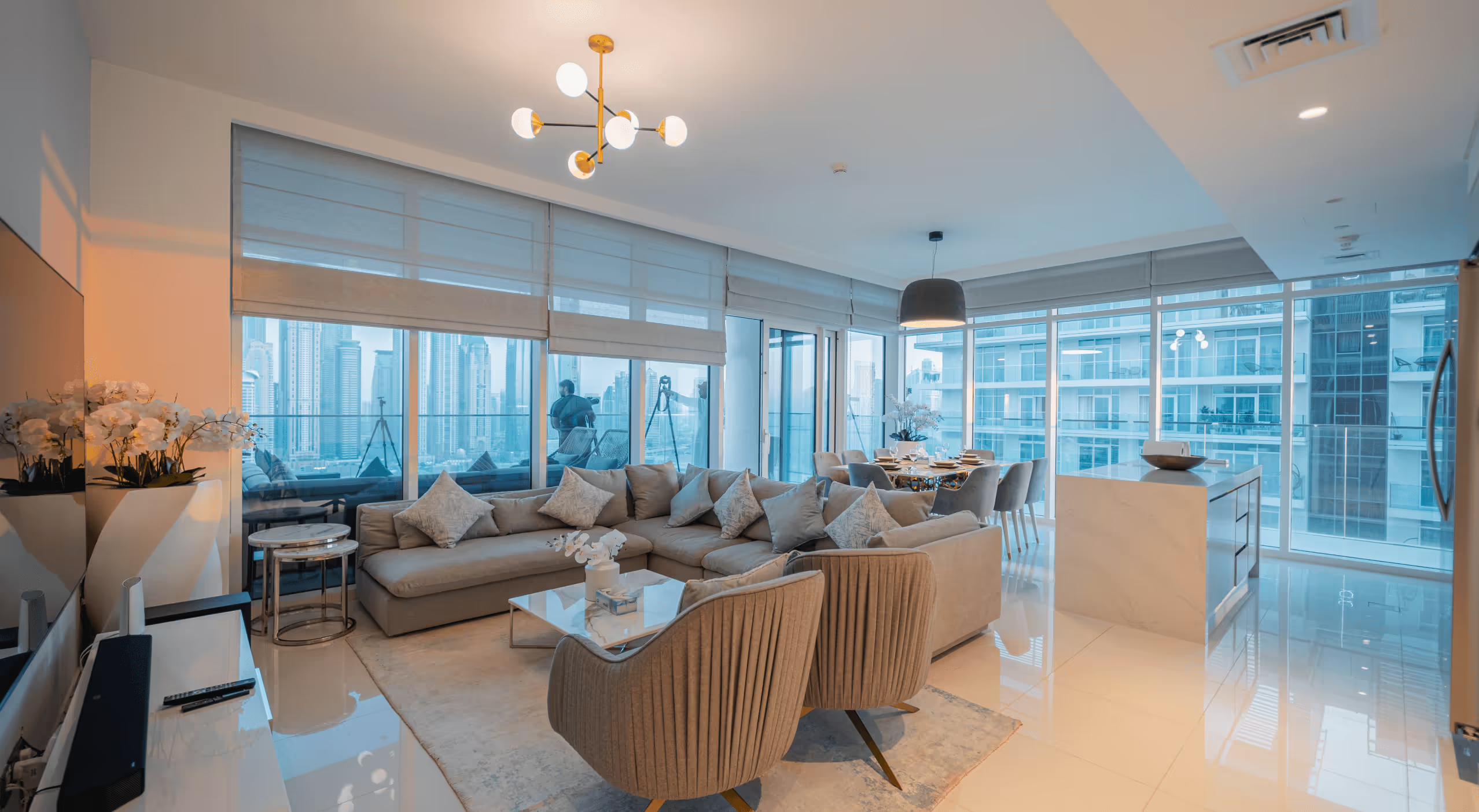
Penthouse bookings skew towards couples, business travellers, and lifestyle visitors drawn by skyline views and central access. Stays are shorter, typically two to five nights, while booking frequency is higher, so the premium attaches to the view and the location rather than to floor area.

That distinction sets pricing strategy, listing positioning, furnishing decisions, and the operating model.

Revenue: How the Numbers Compare

Both types produce strong annual revenue from opposite directions.

Villas on Palm Jumeirah record nightly rates from AED 2,500 to AED 15,000 depending on size, condition, and positioning, so a well-run beachfront villa can reach a substantial annual figure from few stays. Penthouses build the year from frequency: a Downtown three-bedroom with a Burj Khalifa view has produced around AED 323,000 annually under professional management, with results varying by unit type, view, and season.

  • Booking volume: Luxury villa: Fewer stays, each worth more; Penthouse: More frequent stays, shorter gaps
  • Revenue concentration: Luxury villa: Weighted towards the peak window; Penthouse: Spread across the year
  • Primary driver: Luxury villa: Average daily rate; Penthouse: Occupancy and booking pace

Because the two sit at different points on rate and volume, the comparison reads more clearly through ADR and RevPAR than through annual revenue alone. Across the First Class Property Management portfolio of more than 630 properties, as of July 2026, occupancy has held above 90%, and short-term rental returns run approximately 27% higher than those of comparable long-term rentals, a portfolio result rather than a figure any individual property is guaranteed to reach.

Operational Complexity: Where the Real Differences Live

The operating gap is wider than the difference in nightly rate suggests, and it accounts for most of the variation in running cost.

Villas carry the heavier operation. Private pools require regular servicing and safety compliance, gardens need continuous upkeep, and a larger floor area extends turnover times while raising the cleaning cost of each stay. Staff quarters, private parking, or beach access each add something to manage, so a villa turnover is usually a multi-hour job for a team.

Penthouses are lighter, though not light. Building access systems, concierge coordination, lift scheduling, and shared amenity rules all need handling, and guest expectations around cleanliness and presentation sit high because the price point sets them there. The footprint is smaller, the turnover faster, and the maintenance scope narrower.

For operational load alone, a penthouse asks less, while a villa with a fuller operation behind it may produce the highest absolute returns in a portfolio.

Seasonality and Demand Patterns

Villa demand follows a pronounced seasonal curve, with the November to March peak carrying most of the high-value bookings. Summer leisure demand softens, though extended family stays and staycations hold a baseline, so a villa's rate is best set to move with the swing rather than hold an annual figure, provided any reduction remains commercially viable.

Penthouse demand runs closer to flat, since business travel does not follow holiday seasonality and short-stay visitors book across the year, producing a smoother revenue curve with fewer peak-season spikes.

Penthouses therefore deliver the steadier monthly pattern, while villas carry the higher annual upside for owners who can plan around seasonal variation.

Maintenance, Wear, and Long-Term Asset Impact

Villas absorb more physical wear, since outdoor areas, pools, gardens, and larger living spaces all add surface to maintain, furnishing costs are higher, and replacement cycles for soft furnishings and linens come round sooner.

That wear can be kept manageable with a preventative approach: scheduled inspections, servicing intervals treated as an operational baseline rather than a universal standard, and guest screening proportionate to the value of the property. First Class Property Management runs hotel-grade housekeeping and in-house laundry across both property types.

Penthouses take less physical wear while being more sensitive to cosmetic detail, since a scuffed wall in a single open living space is more visible than in a villa with several rooms. High-floor units also carry considerations around windows, balconies, and air-conditioning systems, best handled on a set schedule that follows the manufacturer's instructions.

Both types hold long-term value best under management shaped to what each one needs.

Which Suits Which Owner?

Location does much of the work in both cases, since the strongest neighbourhoods for STR investment hold both types, so the choice comes down to the profile an owner wants to run.

A villa tends to suit an owner who:

  • Owns in Palm Jumeirah, Emirates Hills, Dubai Hills, or a comparable villa community
  • Accepts a heavier operation in exchange for higher absolute returns
  • Has standout features, such as a private pool, beach access, or a garden, supporting a premium rate
  • Is targeting families, groups, and high-net-worth travellers
  • Can plan around seasonal revenue variation

A penthouse tends to suit an owner who:

  • Owns in Downtown, Marina, JBR, or a comparable high-rise location
  • Prefers smoother, more predictable monthly cashflow
  • Has the view, the location, or both as the property's main draw
  • Is targeting couples, business travellers, and short-stay visitors
  • Wants a lighter operational profile

Either performs well where:

  • Professional management handles operations, pricing, and guest experience
  • The location carries genuine short-term rental demand
  • The owner works to the revenue profile that type delivers

Why Management Approach Must Differ

A single operating playbook tends to serve one of the two poorly, since a Palm Jumeirah villa and a Downtown penthouse make different demands at almost every stage.

Villa management runs on dedicated maintenance scheduling, pool and garden oversight, longer turnover windows, and guest communication that accounts for the scale of the property, closer in service level to a private resort.

Penthouse management runs on building-level coordination, faster turnovers, exacting presentation standards, and listing positioning built around the view and the location, supported by a concierge service and a hotel-like level of care.

First Class Property Management runs both property types with teams structured around what each requires, and the standard is reflected in a 4.9 Airbnb rating from 12,344 reviews, as of June 2026, alongside a 9.5 rating from 3,093 Booking.com reviews, as of July 2026.

Get a Property-Specific Revenue Assessment

A villa and a penthouse are assessed the same way, since revenue potential follows location, condition, management, and positioning rather than property type. A property-specific revenue assessment sets out what a particular property can realistically achieve under professional management.

FAQ

Does a villa need a different holiday home licence from a penthouse? No. Both are licensed as holiday homes with DET (Dubai Department of Economy and Tourism, formerly DTCM), and the permit typically takes one to two business days for either property type. What differs is the operation behind it, since a villa has more space and more outdoor area to cover.

Which type suits an owner who uses the property personally each year? A penthouse is generally easier to block for personal use, because demand is spread across the year and removing a week costs less in revenue terms. Blocking villa weeks between November and March is more expensive, since that window carries a large share of the annual total.

What happens when short-term demand softens? A softer period is usually handled by adjusting the rental strategy rather than the property. First Class Property Management operates across holiday, short-term, and mid-term rentals, so a villa can move to a longer booking pattern through the summer, while penthouse demand from business travel tends to continue.

Experience stress-free property management with our top-tier service.

Estimate your revenue