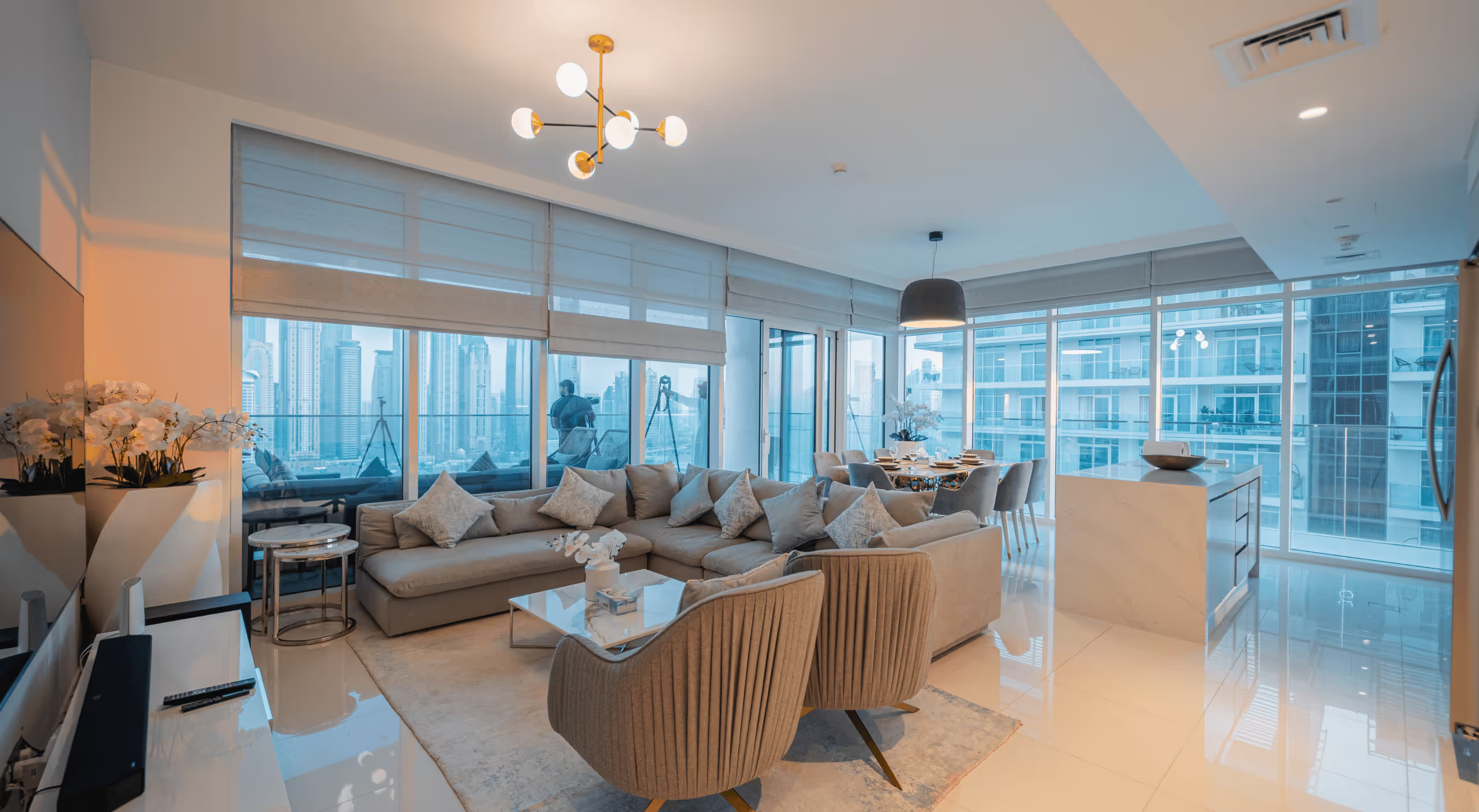
A pet-friendly policy suits a particular kind of Dubai property rather than every listing on Airbnb. Demand from pet-owning residents, relocating professionals, and visiting families runs ahead of supply, so a well-matched property can hold a premium and attract longer stays, while a property with delicate finishes, or one in a building that prohibits pets, carries risk the premium does not repay. The decision comes down to flooring, furnishings, outdoor access, and what the building or community rules permit.
A Niche That's Growing Faster Than Most Owners Realise
Pet-friendly stays remain one of the least developed niches in Dubai's short-term rental market, since supply has stayed thin while pet ownership across the city has grown. An owner who positions a property deliberately reaches a guest segment that books longer, accepts a premium, and has few alternatives to compare.
Those same barriers keep supply low, as building rules, damage risk, cleaning complexity, and community restrictions each need working through before a listing can carry the label. What follows covers when the policy makes financial sense, when it does not, and what running one involves.
The Demand Side: Why Pet-Friendly Matters
Pet ownership in Dubai has grown in recent years, and the city has become more accommodating with it, as pet-friendly parks, cafes, beaches, and retail spaces have expanded across the emirate.
What pet owners lack is options. Most Dubai hotels either decline pets or apply surcharges with strict size and breed conditions, and most holiday home listings do not accept them either, so a pet-friendly Airbnb in Dubai competes in a far thinner field than a general listing does. Pet-owning travellers and relocating professionals have genuine difficulty finding quality short-term accommodation that accepts their animals.
For an owner willing to fill that gap, the position is unusually strong, since pet-friendly listings receive a disproportionate share of enquiries from pet-owning guests. A property that appears among twenty pet-friendly options rather than among two thousand general listings is easier to find, which shows in both visibility and conversion.
The Financial Case: What Pet-Friendly Actually Delivers
A pet-friendly policy can support revenue in three ways.
Pricing premiums. Pet-friendly properties can hold a nightly premium because guests have fewer alternatives, and while the premium varies by property type and area, it is not uncommon for pet-friendly listings to command 10 to 20% above comparable non-pet properties. A per-stay pet fee, typically AED 200 to 500, partially offsets the additional cleaning.
Higher occupancy during soft periods. Pet-owning guests often book in the periods that are hardest to fill, since relocating professionals need accommodation for weeks or months and book further ahead, which lengthens booking lead time. Soft-period bookings are where an occupancy figure is protected: across the First Class Property Management portfolio of more than 630 properties, occupancy has held above 90% as of July 2026, though individual results vary with property type, area, and season.
Longer average stays. Travelling with a pet is logistically demanding, so pet owners tend to book five nights or more because the effort of arranging pet travel makes a short stay impractical. Longer stays mean fewer turnovers and a lower operational cost per booking.
The Damage Question: How Real Is the Risk?
The concern that stops most owners is legitimate, though it is often larger in prospect than in practice.
Most pet-related wear in a holiday home is cosmetic and minor: scratched floors, chewed furniture edges, fur on soft furnishings, and the occasional accident on a rug. Serious structural damage is uncommon where screening and house rules are applied consistently.
The associated costs are real but manageable:
- Deep cleaning after a pet stay, AED 200 to 400 above a standard clean
- More frequent replacement of rugs, cushion covers, and soft furnishings
- Occasional repair to scratched flooring or damaged furniture edges
- Additional lint removal and allergen treatment before the next arrival
The premium and the pet fee usually cover those costs, though the balance depends on the property type and the standard it is held to. A condition record before and after each pet stay, kept alongside holiday home insurance, may provide useful evidence if a claim becomes necessary.
The downside rises with certain property types, since a villa with hardwood floors and designer furniture carries more exposure than an apartment with tiled floors and durable furnishings, which is why the policy is best decided property by property.