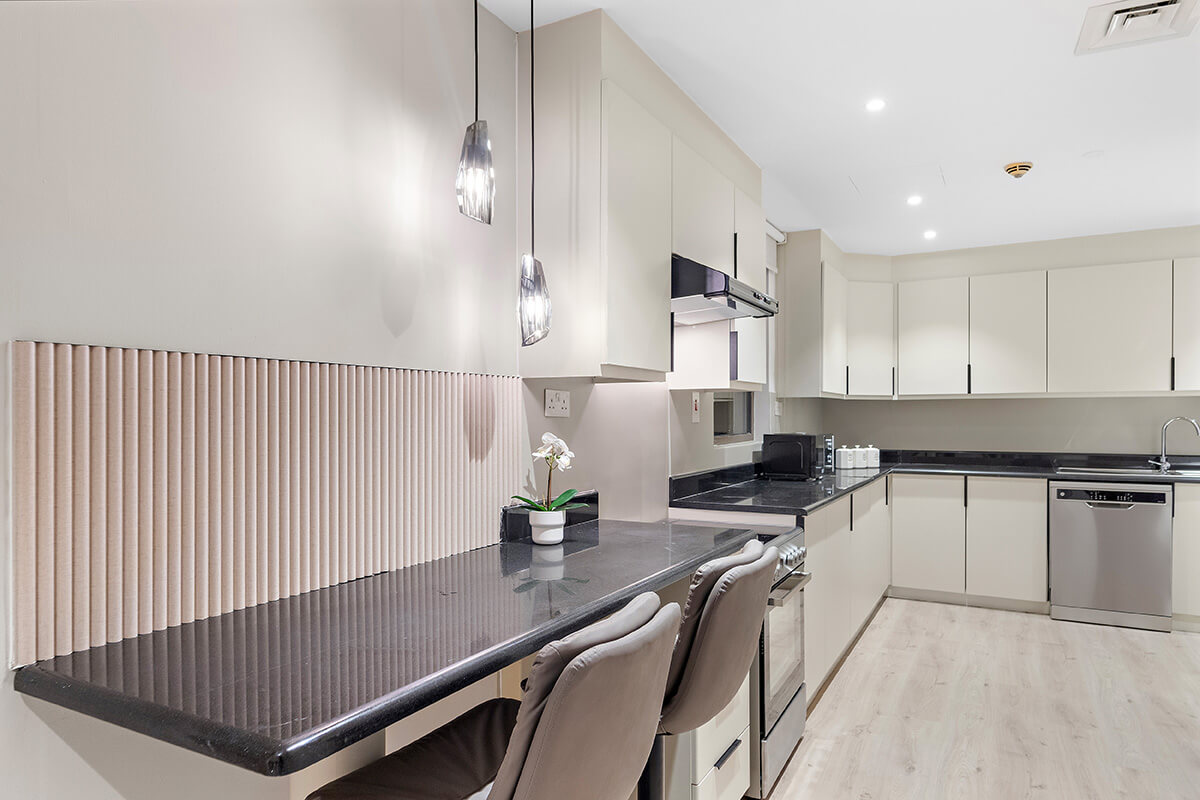
For a new holiday home, this assessment helps establish a proportionate furnishing budget before launch. For an established property, it helps prioritise changes supported by wear, guest feedback, or layout constraints. This guide uses unit-type benchmarks, indicative design costs, and a proposal worksheet to show how each purchase can be tested against guest needs, operating costs, and the available evidence.
What Does Furnishing ROI Actually Measure?
ROI and payback answer related but different questions. ROI compares the net financial gain over a defined period with the furnishing investment, while the payback period estimates how long the additional net revenue would take to recover that investment. Both calculations depend on evidence that the furnishing changes produced the additional revenue. Without that evidence, the result remains an assumption rather than a measured return. Furnishing is one influence among several in maximising holiday home revenue, alongside pricing, occupancy, reviews, and distribution.
Capacity and Layout: What Do the Figures Show?
Bedroom count provides a useful comparison, although it does not isolate design quality. Portfolio figures can provide context on how performance differs by unit type, although they do not isolate design quality or the return from a furnishing decision.
First Class Property Management portfolio data, January to August 2026; across the portfolio in Dubai, weighted by active units and days, with ADR additionally weighted by occupancy.
- Studio: Occupancy (%): 90.5; ADR (AED): 240; RevPAR (AED): 217
- 1BR: Occupancy (%): 86.2; ADR (AED): 356; RevPAR (AED): 307
- 2BR: Occupancy (%): 84.7; ADR (AED): 516; RevPAR (AED): 437
- 3BR: Occupancy (%): 83.0; ADR (AED): 765; RevPAR (AED): 635
- 4BR: Occupancy (%): 79.5; ADR (AED): 960; RevPAR (AED): 763
ADR and RevPAR rise across the larger unit types in this portfolio sample, while occupancy gradually decreases. The figures do not isolate the effects of sleeping capacity, layout, design quality, location, or property positioning, so they should be treated as context rather than evidence of the return from a particular furnishing decision. The table compares different homes and does not estimate the effect of changing the layout or adding sleeping capacity within a particular property.
Unit-type figures are reported only where at least five units were active in a month. Period figures require that threshold to be met in at least six of the eight months.
A specific First Class Property Management property, a Downtown Dubai one-bedroom with a converted layout, recorded annual revenue of AED 160,000. This is neither a guaranteed nor a market-wide outcome, and it does not show what the conversion itself changed.
If your decision also involves choosing a property type, bedroom count belongs alongside location, costs, and the practical layout.
Presentation, Comfort, and Guest Experience
Professional photography taken after furnishing can represent the completed interior accurately and help guests understand the space before booking. The furnishing plan and photography brief should therefore remain aligned, so the listing reflects the layout, amenities, and condition that guests will find on arrival.
Guest reviews are most useful for design decisions when comments identify a specific concern, such as mattress support or seating comfort, rather than providing only a general rating. Comfort deserves its own assessment alongside appearance, and the plainest test is whether the proposal shows where each guest will sleep, sit, eat, and keep luggage.
Balancing Finish Level and Durability
A finish choice is easier to assess when the designer explains its practical implications. Useful questions concern how each finish cleans, how it holds up under repeated stays, and whether a matching replacement can be sourced later. An attractive scheme may still need adjustments for repeated guest use. The proposal should allow for furniture replacement according to condition, with the likely care requirements considered before purchase rather than only when wear appears.
First Class Property Management's published indicative prices span from AED 25,000 for a Premium studio to AED 135,000 for a Signature three-bedroom home with a maid's room. Properties with four or more bedrooms are quoted individually. Pricing should be confirmed for the property and project scope. The full tier table sits within holiday home set-up costs, alongside the wider launch budget; a finish tier by itself does not establish a revenue outcome.
A Worksheet for the Design Decision
The worksheet pairs each design choice with the evidence that would support it, keeping possible benefits separate from assumptions about income.
- Sleeping layout: What It Can Change: Capacity, privacy, and circulation; Evidence to Ask For: Floor plan showing usable space; Risk: More beds without adequate living space
- Beds and seating: What It Can Change: Comfort during the stay; Evidence to Ask For: Condition assessment and guest comments; Risk: Appearance masking poor support
- Styling and lighting: What It Can Change: Presentation in listing photographs; Evidence to Ask For: Images representing the actual rooms; Risk: Expectations exceeding the delivered interior
- Materials and finishes: What It Can Change: Cleaning and replacement needs; Evidence to Ask For: Care guidance and replacement availability; Risk: Ongoing costs omitted from the proposal
The aim is a proposal whose reasoning remains clear even where a financial benefit cannot be measured separately.
How Should You Compare Design Proposals?
Comparable proposals need a shared description of the work. It helps to put these questions to the designer or operator before approving purchases:
- Which existing items can remain?
- What guest need does each proposed change address?
- Which costs are confirmed, and which depend on the property assessment?
- What evidence supports any revenue expectation?
- How will the completed interior be represented in the listing?
Where evidence is limited, a written explanation of the assumption is more useful than a precise-looking return estimate.
How First Class Property Management Handles Design and Pricing
First Class Property Management offers Premium and Signature interior-design tiers, with indicative pricing varying by unit size and project scope. Furnishing set-up forms part of the onboarding process, while AI-powered dynamic pricing is reviewed daily by pricing specialists. Design and pricing remain separate influences on performance, so neither should be used alone to claim a furnishing return.
FAQ
How can you separate personal taste from rental priorities?
You can identify purchases intended mainly for your own enjoyment separately from those addressing guest needs. That distinction allows personal preference to remain part of the brief without requiring each decorative choice to carry a revenue claim. It also makes the reasons for approving the scheme clearer.
How should you assess a suggested substitute for an unavailable item?
A substitute can be assessed against the function agreed for the original item, including comfort, dimensions, and care requirements. It helps to request the revised specification before approval. A similar appearance alone may not answer whether the replacement serves the same purpose within the agreed layout.
What if income changes after the redesign?
An income change deserves a review of the operating context. Results from different seasons may not provide a comparable basis. Pricing or availability may also have changed alongside the interior. It helps to discuss those factors with the operator before attributing the result to furnishings, while checking guest comments for feedback on the changes.
To assess a proposal for your home, you can discuss Airbnb interior design with First Class Property Management.